



The Solomon Paradox: Why We Give Better Advice to Others Than Ourselves

You can spot exactly what a friend should do about their relationship, their job, their falling-out with a sibling. Your own version of the same problem feels foggy and impossible. Psychologists call this the Solomon Paradox: named for a king famous for wise judgments about everyone except his own family, whose personal life was a mess.
The pattern
Research from psychologist Igor Grossmann found people consistently reason more wisely about other people's dilemmas than their own. Given a friend's conflict, they weigh multiple perspectives, admit uncertainty, consider how things might change. Given the identical conflict but framed as their own, the same people get narrower, more certain, more defensive.
The problem isn't intelligence. It's proximity. Your own dilemmas come wrapped in identity, ego and fear of being wrong, none of which show up when you're advising someone else.
Why distance helps
Stepping back from a problem, even slightly, seems to unlock the same clear thinking you'd give a friend. Researchers found that simply imagining a decision as if it belonged to someone else improved the quality of people's reasoning about it. The distance does the work.
A practical workaround
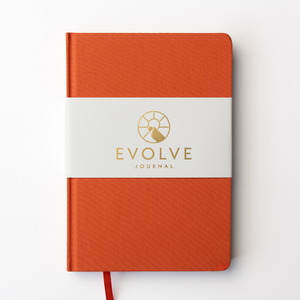
This is the thinking behind the Advice for Future You prompt built into the Evolve Journal. Writing advice to a version of yourself a few months out manufactures the same distance you'd naturally give a friend, just pointed at your own life instead of theirs.
Next time you're stuck on something that feels unsolvable, try writing it down as if a friend brought it to you. The answer is often already there. You just can't see it standing this close.