




How to Journal Your Way Out of Catastrophising
Catastrophising rarely feels like a choice. A minor worry loops until it's a full disaster film, and by the third replay it feels less like anxiety and more like planning. It isn't. There's a more useful version of that same instinct, and it takes about five minutes.
Name the actual worry
Vague dread is exhausting precisely because it's vague. Writing down, in plain terms, exactly what you're afraid might happen does most of the work on its own. A fear with a name is smaller than a fear without one.
Define the actual worst case
Not the spiralling version your brain runs at 2am, the realistic worst case. What would genuinely happen if the thing you're dreading actually occurred? Write it out fully rather than letting it stay a shapeless threat.
Rate how likely it actually is
Put a number on it, honestly, out of a hundred. Most catastrophised outcomes, looked at squarely, sit closer to five percent than fifty. The exercise isn't about pretending everything's fine. It's about seeing the odds you're actually facing instead of the odds your anxiety is showing you.
Plan the response anyway
Even for the unlikely worst case, write down what you'd actually do if it happened. This is the part that quiets the loop. Once you know your response is already planned, there's nothing left for the anxious replaying to accomplish.
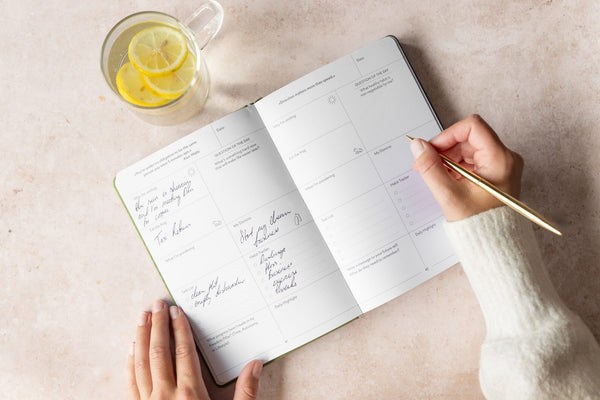
This is close to the fear-setting exercise built into the Evolve Journal, and it sits inside the Health pillar for good reason: naming, sizing and planning for a fear does more to quiet it than trying to think your way out of feeling it at all.