





Reflection Journal: What It Is, How to Start & 30 Prompts

What Is a Reflection Journal?
A reflection journal is a structured writing practice where you examine your thoughts, actions, and emotions. It goes beyond recording what happened. You're asking why it happened and what it means.
That makes it different from a diary. A diary documents events in order. Tuesday: went to the gym. Wednesday: had a meeting. It's a record, and that's fine. A reflection journal turns those events into insight. What did the meeting reveal about how I handle conflict? Why did I skip the gym on Thursday?
It's also broader than a gratitude journal. Gratitude journaling focuses specifically on appreciation, which is valuable but narrower in scope. A reflection journal covers the full range of experience: wins, challenges, patterns, and the things that need to change. Gratitude can sit inside a reflection journal, but it doesn't define it.
Here's the core idea: experience alone doesn't teach you much. We all know people with twenty years of experience who keep making the same mistakes. It's the act of examining experience that produces growth. Think of reflection journaling as mental decluttering. It brings clarity, a greater sense of control, and a quieter mind at the end of the day.
If you've tried journaling before and quietly given up, you're not alone. This might be a different kind of practice from what you tried.
Why Bother? The Case for Daily Reflection
We accumulate experiences constantly. We rarely stop to examine them. That's the gap where most learning gets lost.
There's research suggesting that taking a few minutes to reflect on what you've learned can help you perform better than simply moving on to the next thing, partly because it builds your confidence that you can improve. Experience plus reflection tends to beat experience alone.
There's a compounding effect, too. A single journal entry is useful. But patterns across days and weeks only become visible when you look back consistently. You start catching your emotional triggers earlier. You notice where your energy goes. You spot the gap between what you say matters and what you actually do.
Self-monitoring, the simple act of tracking your own actions and thoughts, raises accountability. When you write something down, you're more likely to follow through. It's harder to ignore a pattern when it's staring back at you in your own handwriting.
Structured prompts help here. If you've ever sat down to journal and thought, "I don't know what to write," you've hit the blank page problem. Many people find unstructured journaling overwhelming. A clear prompt removes that barrier.
This isn't a new idea, either. The Stoic philosopher Seneca described ending each day by reviewing where he had fallen short and how he could do better. That practice is around two thousand years old. It still works.
Reflection Journal vs Diary vs Gratitude Journal: A Plain-English Comparison
These three formats get confused a lot, so here's a simple breakdown.
A diary records what happened. It's chronological. Monday's entry covers Monday's events. There's no obligation to draw lessons or look for meaning. It's a log.
A gratitude journal records what you're thankful for. It's positive by design, and that's its strength. But it's narrower in scope. It doesn't ask you to examine what went wrong or what needs to change.
A reflection journal examines what happened and what it means. It includes honest assessment of what didn't go well. Each entry closes with a lesson, an intention, or something you'd do differently. It's the broadest of the three.
These aren't competing tools. Gratitude can be one element within a reflection journal. But if you've tried a diary and found it felt pointless, or tried a gratitude journal and found it didn't go deep enough, a reflection journal is a different approach. It's low-stakes to start and more honest by design.
How to Start a Reflection Journal: A Simple 5-Minute Evening Routine
Consistency matters far more than volume. Five minutes an evening is enough. You don't need to fill a page.
Here's a concrete three-step structure you can use tonight:
- One thing that went well today, and why. Not just "had a good meeting" but what made it good. This trains you to notice what's working.
- One thing that didn't go well, and what you'd do differently. Honest, not harsh. The goal is learning, not self-criticism.
- One intention for tomorrow. Something specific. "Be more patient in the afternoon stand-up" beats "be a better person."
That's the whole structure. Three sentences minimum. Done.
A few practical tips for making it stick: keep your journal visible. Bedside table, desk, next to the kettle. Habit-stack it onto something you already do every evening, like brushing your teeth or making a cup of tea. Have a pen ready. Friction is the enemy of consistency.
If you've tried journaling before and quit, an undated journal removes the guilt of missed days. There's no catching up to do. You just open the next blank page whenever you're ready.
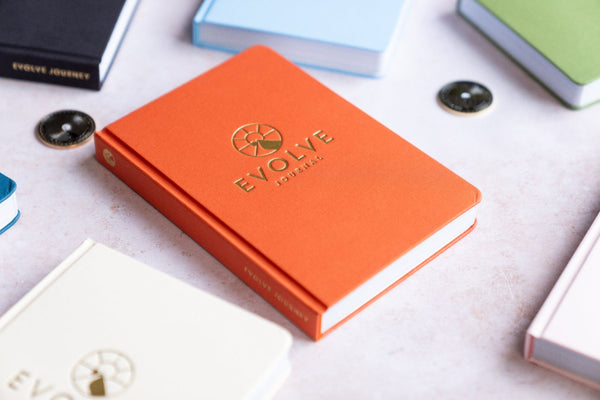
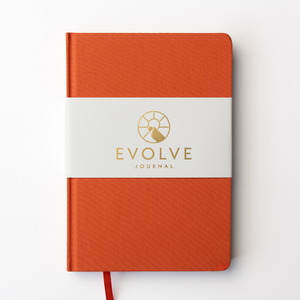
If you'd like a printed option, the Evolve Journal (full disclosure: we make it) is an undated six-month guided journal that combines gratitude, daily planning, goals and a habit tracker. It includes a new reflective question each day and an evening review section. It costs £34.99 with free standard UK delivery, is rated 4.9 from 438 reviews, and comes with a 180-day money-back guarantee. See the Evolve Journal.
The Weekly Review: The Layer Most People Miss
Daily entries are valuable on their own. But the weekly review is where the compounding effect really kicks in.
Once a week, spend ten to fifteen minutes reading back through your entries. You're looking for patterns: recurring emotions, repeated frustrations, consistent wins you hadn't noticed. Individual daily entries are data points. The weekly review is where the trend line becomes visible.
Three questions to guide your weekly review:
- What pattern showed up most this week?
- What am I avoiding?
- What do I want to do differently next week?
Most journaling advice skips this step entirely. That's a shame, because the weekly review is where scattered observations turn into real self-knowledge. It doesn't need to be a long session. A cup of tea and fifteen minutes on a Sunday evening is plenty.
30 Reflection Journal Prompts for Self-Improvement
These prompts are grouped by theme so you can pick what feels most relevant right now. You don't need to work through them in order. No single prompt needs a long answer. A few honest sentences are enough.
Daily Reflection Prompts (The Day)
- What was the best moment of today, and what made it good?
- What drained my energy today, and is there anything I can change about that?
- Did I act in line with my values today? Where did I fall short?
- What is one thing I wish I had done differently today?
- What am I most grateful for from today, and why does it matter?
- What did today teach me about myself?
Relationship Prompts
- Which relationship in my life needs more of my attention right now?
- Did I show up for the people I care about today? How?
- Is there a conversation I've been avoiding? What's holding me back?
- How did I make someone else feel today, and was that intentional?
- What do I appreciate about the people closest to me that I rarely say out loud?
- Where have I been unfair or impatient with someone recently?
Work & Productivity Prompts
- What did I actually accomplish today versus what I planned to accomplish?
- Where did I waste time or energy on something that didn't matter?
- What is one work problem I keep encountering, and what's the real cause?
- Did I do my most important task today? If not, what got in the way?
- What would make tomorrow at work feel like a success?
- Am I working towards something that matters to me?
Personal Growth Prompts
- What is one belief I hold that might be holding me back?
- What habit am I most proud of building, and what helped it stick?
- What am I currently avoiding that I know I should face?
- What would the version of me I want to become do differently today?
- What has been my biggest lesson this month?
- Where am I growing, even if it doesn't feel like it yet?
Values-Based Prompts
- What are my three most important values, and did my actions today reflect them?
- Where am I spending time or energy on things that don't align with what I say matters to me?
- What does living a good life look like to me, and how close am I to it?
- Is there an area of my life where I'm compromising on something I care about?
- What kind of person do I want to be remembered as, and am I becoming that person?
- If I could give my future self one piece of advice based on this week, what would it be?
Start Small, Stay Consistent
The goal is not a perfect journal. It's a consistent one.
Five minutes an evening, done most nights, builds into real self-knowledge over weeks and months. It gets easier and more useful the longer you do it.
If you've quit journaling before, that's fine. Starting again is always available. An undated format means there's no catching up to do. No guilt. Just the next blank page.
Pick one prompt from the list above. Write three sentences tonight. That's all it takes to begin.
Want more? Try our journal prompts for beginners, or see how the Evolve Journal works as a Stoic journal.