





Journal Prompts for Beginners: Build a Habit That Sticks

Why Most People Quit Their Journal by Day Three
If you've ever bought a beautiful journal and left it mostly empty, this is for you. You're not alone, and you're not the problem.
According to YouGov's UK Health & Wellbeing tracker, only 8% of UK adults currently journal, yet a further 20% have tried it in the past. That's a lot of abandoned notebooks. Most people have quit at least once.
Here's what we've learned after eight years of building journals: quitting isn't a character flaw. It's a design problem. The blank page is the culprit, not the person staring at it.
We call it "blank page paralysis." The two main reasons beginners stop are not knowing what to write and perfectionism. Structured prompts remove both barriers before a session even starts.
This article gives you practical prompts grouped by purpose (morning, evening, gratitude, and goals), plus the habit science to make them stick. No fluff, no pressure.
What the Science Actually Says (Without the Hype)
We want to be straight with you here. Journaling has real benefits, but they're modest, and we think honesty builds more trust than hype.
Research by James Pennebaker at the University of Texas found that writing for just 15 to 20 minutes, three to four times a week, produces measurable wellbeing improvements that can persist for months. A 12-week randomised controlled trial at Penn State University found that Positive Affect Journaling produced significant reductions in anxiety within the first month.
UCLA neuroimaging research offers a useful picture of what's happening in your brain: expressive writing activates the prefrontal cortex (the part that helps you think clearly and make decisions) while dampening the amygdala (the part that fires up when you feel threatened or stressed). In plain terms, writing helps you process emotions rather than just react to them.
A 2026 systematic review of 51 studies found that gratitude writing and "best possible self" exercises showed the strongest, most reliable effects on wellbeing and positive emotion.
Context matters too. According to the Mental Health Foundation's analysis of NHS data, one in six people in the UK experiences a common mental health problem in any given week. Journaling is an accessible, low-cost support tool. It's not a cure, and we'd never claim it is.
The honest numbers: trials show average improvements of around 5% in mental health symptom scores. Effects on diagnosed depression are smaller and less consistent. That 5% might sound modest on paper, but for many people it's the difference between a rough week and a manageable one.
Morning Journal Prompts for Beginners
Morning journaling is about intention-setting. Instead of reaching for your phone and reacting to whatever lands in your inbox, you spend a couple of minutes deciding how you want your day to feel. It's a small act of agency that shifts your starting point.
Here are five prompts to try. Pick one. Just one.
- "What's one thing I want to feel by the end of today?"
- "What's the single most important thing I need to do today, and why does it matter?"
- "What am I looking forward to today, even if it's small?"
- "Is there anything I'm carrying from yesterday that I want to leave behind this morning?"
- "What would make today feel like a good day?"
Keep morning sessions to two to five minutes. That's the micro-habit approach: make the bar so low it's almost impossible to fail.
Three sentences is enough. A full page is never required. If you write more, great. If you don't, that's still a complete session.
Evening Journal Prompts for Beginners
Evening journaling serves a different purpose. It's about reflection, winding down, and processing the day before sleep. Think of it as closing a browser tab in your brain.
- "What went well today, even if it was tiny?"
- "What's one thing I learned or noticed about myself today?"
- "Was there a moment today I want to remember?"
- "What would I do differently if I had today again?"
- "What am I grateful for right now, and why specifically?"
A quick note on gratitude frequency: some research suggests that weekly gratitude journaling can actually outperform daily practice, because frequent repetition dulls the emotional impact. If writing "three things I'm grateful for" every single night starts to feel mechanical, try doing it two or three times a week instead. Experiment. Find what keeps it genuine for you.
Evening journaling suits people who find mornings rushed. There's no universally correct time. Consistency matters far more than timing.
Goal-Setting and Gratitude Prompts That Don't Feel Overwhelming
Most goal-setting prompts feel too big. "Where do you see yourself in five years?" is a terrible question for someone who's just trying to drink more water. These prompts are deliberately low-stakes and concrete.
Goal Prompts
- "What's one small thing I could do this week that future-me would thank me for?"
- "What habit am I trying to build right now, and what's the smallest possible version of it?"
- "What does a good month look like for me? Not perfect. Just good."
Gratitude Prompts
- "Name three specific things you're grateful for today and write one sentence on why each one matters."
- "Who made your life a little easier recently, and have you told them?"
There's solid evidence behind combining these practices. Research published in the British Journal of Health Psychology found that people who tracked their habits were 42% more likely to follow through on their goals. Habit tracking inside a journal isn't just motivational; it's evidence-backed.
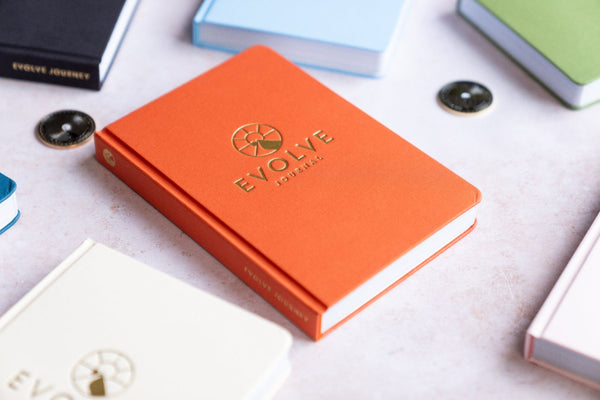
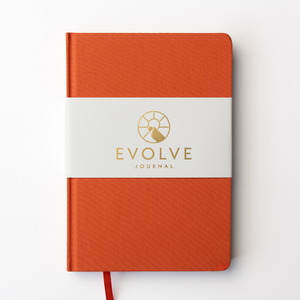
If you'd like a guided option that combines gratitude, daily planning, and habit tracking on one undated page, the Evolve Journal is what we built over eight years to solve exactly this problem. Six months of pages, £34.99, no dated pages (so no guilt for missed days), and 91% of customers reported feeling better within 30 days across 438+ verified reviews at 4.9/5 stars. You can also explore our gratitude journal page for more on how it works.
How to Build a Journaling Habit That Actually Lasts
Research from University College London by Phillippa Lally and her team found that forming a new habit takes an average of 66 days, with a range of 18 to 254 days depending on the person and the behaviour. So give yourself time. This isn't a three-day project.
The same UCL study found something reassuring: missing a single day has no measurable impact on long-term habit formation. One missed day is not failure. It's normal.
The most practical technique we've seen is habit stacking: linking your journaling to something you already do. For example, "After I pour my morning coffee, I will write for two minutes." This approach increases habit success rates by 74% because it piggybacks on neural pathways your brain has already built.
Undated journals help here too. Dated pages create a visible record of every missed day, which breeds guilt. Undated pages remove that friction entirely. You pick up where you left off, whenever you're ready.
Studies on writing interventions consistently find that structured, guided formats outperform unstructured free writing on adherence during the first 90 days. If you've tried blank-page journaling and quit, guided prompts produce better stick rates. It's not cheating; it's just better design.
The micro-habit rule: two minutes or three sentences counts as a complete session. Lower the bar until it feels almost too easy, then build from there. The goal is not a perfect journal. It's a useful one.
Start Small, Start Today
The blank page isn't a test of willpower. It's a design problem, and guided prompts, micro-habits, and an undated format solve it structurally.
Most research shows measurable improvements within two to four weeks of consistent practice. That's a realistic, honest timeline.
So here's our suggestion: pick one prompt from this article. Any one. Write three sentences today. That's it. There's no wrong way to begin. The only requirement is beginning.
We started this whole thing because we couldn't stick with journals ourselves. Eight years later, we're still figuring it out, one page at a time. You will too.